Tuesday, February 10, 2026

Crossing the Continental Divide

There are six interstates which cross the continental divide, five east-west routes: 10, 40, 70, 80, and 90, ans one north-south route: 15. Some of the crossings are more spectacular than others.


Here are my rankings:

#6 - Interstate 10.  Separ, New Mexico. Is this even a summit? There's a trading post at the exit, but the difference in elevation on either side is virtually imperceptible. Appararently, NMDOT marks the spot, two miles to the west, but this website indicates that it's here: https://clui.org/ludb/site/interstate-10-crossing-continental-divide 32.202638935301025, -108.42381480815185

#5 - Interstate 80. The divide splits in Wyoming, creating a basin, and the interstate passes right through it, resulting in two crossings on I-80.  The crossing isn't from east to west or west to east, instead it's east to basin, and then basin to west. It's a little anticlimatic.  Elevation 6930 at exit 158, and again just west of exit 206.  In between them is the town of Wamsutter.

#4 - Interstate 40. Campbell Pass, elevation 7275. In New Mexico. At least here they have a touirst trap, with souvenir shops and Indian an village. 35°25'18.9"N 108°18'30.2"W

#3 - Interstate 15. Monida Pass, elevation 6870, on the Idaho-Montana state line. Now we're starting to see some passes that actually look like mounain passes.  Montana welcomes you with the ever elusive Exit 0.

#2 - Interstate 70. Colorado, inside the Eisenhower Tunnel. This is the highest point on the entire interstate system, 11,158 feet above sea level at the western portal.  

#1 - Interstate 90. Lookout Pass, elevation 4725. at the state line between Montana and Idaho, there's a steep climb on both sides, and it's crowned with a ski resort at the top. Even though it's much lower than the Eisenhower Tunnel, this one screams mountain summit. 47.45451106893787, -115.69468762830918


Sunday, August 10, 2025

Recipe: Homemade Vanilla Ice Cream

This simple recipe uses just four ingredients, but it does require planning ahead.

To do this you really need to make the ice cream a day ahead and then expect an hour in the ice cream maker whule it freezes.


1 cup milk

1 cur heavy cream

1/4 cup sugar

2 tbsp vanilla flavoring


On the day before...

Combine the four ingredients in a sauce pan and warm over low heat, wisking consistently.  You don't want the mixture to boil because it will quickly bubble over and make a mess all over your stove.  Just be patient and allow it to simmer with a low roll for about five minutes.

After cooking, allow the cream mixture to cool, then transfer it a container and refrigerate it -- overnight if possible.  At the same time, place the cream container from the ice cream machine into the freezer, and leave it overnight, too.


When ready to make the ice cream...

When ready to make the ice cream, remove the cream mixture from the fridge and the container from the freezer, and pour the cream mixture into the chilled container. Place it into the ice cream maker, and pack ice around the edges.  Add some rock salt or sea salt into the ice, which will hasten the the melting and allow the water to be a temoerature lower than normal frrzing point (32°F / 0°C).

Allow the mixer to churn for an hour.  Check progress as the time nears, and adjust timing in either direction as necessary.

Monday, August 4, 2025

Recipe: Cheese Stuffing for Lasagna and Manicotti

This is not a complete recipe, but I need to keep track of this because everytime I make lasagna, I have forgotten it.

I don't make make lasagna very often, but it always seems like it's my first time every time, and I have to wade through a bunch of online recipes just to find this simple combination.

Online recipe blogs have gotten increasingly annoying with pop-ups and anecdotes about how the blogger's family raves over the dish.  Enough already!  Just show me the ingredients and give me the basics about how to put it togteher!  

OK, rant over.


 2 cups ricotta (15oz tub)

1 egg

1 tbsp parsley flakes

1 tsp Italian seasoning

1/2 tsp salt


This will make enough to fill seven manicotti, which is half of a package. It's also enough for a full lasagna.


Thursday, February 1, 2024

Ogden's Union Station

Prologue: I serve on the Supervisory Committee of the Goldenwest Credit Union, an institution that was organized to serve railroad employees in Ogden's Union Station. I wrote the following history to celebrate the Union Station's hundredth anniversary, which is occurring this year.  

I don't know if they'll use my essay at the Annual Meeting, but I find this history interesting, so I thought that I would share it here.

By the way, I should add that, except in my limited official capacity, I do not speak for the Goldenwest Credit Union. The opinions and commentary expressed here are my own, and have not been vetted by nor approved by Goldenwest Credit Union.


OGDEN UNION STATION


This year marks the 100th anniversary of Ogden’s Union Station. That depot building is special to those of us here at Goldenwest because it is our birthplace. Our credit union was founded in that very station only a dozen years after it opened.

Union Station welcomed its first trainload of passengers in November 1924, and instantly became a bustling hub in downtown Ogden. Not long after, seven employees who worked at the depot pooled their resources to form a financial institution -- a new type of institution called a credit union. And the Ogden Railway Employees Federal Credit Union was born, right there in Ogden’s Union Station, on May 13, 1936.


Photo from Utah Historical Society


Within a decade, the depot had entered its heyday; our nation was at war, and Union Station answered the call to service. Every day, 120 trains from four different railroads called on Union Station, sometimes with a frequency approaching one train every five minutes. The station had thirteen platforms on seventeen tracks, and they were all connected by underground passages to keep people off the tracks. Soldiers on their way to and from west coast induction bases and shipyards switched trains here. Union Station was buzzing like never before: A cross-country trip required a change of trains, and in a significant number of those trips, the transfer occurred right here in Ogden.

But how did it come to be that everyone had to change trains in Ogden?

For that answer, we have to look back first to one of the most important dates in Utah’s history, May 10, 1869. It was on that date that Union Pacific crews building the new railroad westward across the continent met up with other crews who had been building eastward for the Central Pacific. The Golden Spike was driven, the Transcontinental Railroad was completed, and the United States was at last connected by railroad coast to coast.

But, despite its name, the Transcontinental Railroad was not one railroad, it was two. Two different competing railroad companies had built the line from opposite ends, and two railroads carried passengers to their meeting location. At that point passengers had to get off a train operated by one company, and then board another train, owned by the other.

This point where the rails met and where the passengers had to change trains was not in Ogden; it was in a lonely outpost on top of a mountain some 75 miles away to the west. A place called Promontory Summit.

As an aside, a lot of people think that the Transcontinental Railroad was completed at Promontory Point, and this incorrect datum is included in a lot of books and histories, even today. However, it was not Promontory Point; it was Promontory Summit. Promontory Point is located at the tip of the Promontory peninsula which juts southward into the Great Salt Lake and is located some thirty miles away from the actual meeting location, Promontory Summit.

If you remember nothing else from this article, remember that the Transcontinental Railroad was completed at Promontory Summit and not Promontory Point. You just might win a bar bet someday.  

But back to Promontory Summit. It was there that westbound passengers would be forced to get off the Union Pacific train and then climb aboard a Central Pacific train to continue their westward journey. Eastbound passengers did the opposite.

Switching trains was not so unusual, no more than switching planes is for travelers today. The issue was that Promontory Summit was completely isolated and far from civilization, just like it still is today. Union Pacific crews had reached Ogden, which was already an established city, in March of 1869, but they kept going, building further west. Congress had picked the meeting spot, and it wasn’t Ogden.

If you’ve ever been up to Golden Spike, you know that it is a long way from anything. It’s on top of a mountain, and there are no services of any kind. Even today, to reach Promontory Summit, you’ll drive a half hour or more past the last town. In 1869, a tent city sprang up at Promontory Summit, as the two railroads and other entrepreneurs attempted to create a town to service the transferring passengers. Remember, everyone who was crossing the country had to get off the train here. Did I mention that Congress picked the spot?

Almost immediately after beginning service, the two railroads recognized that Promontory Summit was a lousy spot to transfer passengers, so the companies began negotiations to establish a better transfer location. Corinne, a town in Box Elder County about ten miles west of Brigham City, lobbied hard to persuade the companies to move the transfer point to their town.

Corinne was the last town along the Union Pacific before Promontory, but Corinne had the advantage of being located on the Wasatch Front, closer to established population centers rather than isolation. And Corinne is located at the lower elevations of the Wasatch Front, rather than up on top of a mountain pass. Corinne seemed to be a great candidate to relocate the transfer station.

However, Brigham Young, who previously had been the governor of the Utah territory and who was still the spiritual leader for most of Utah’s residents, had other ideas. Corinne was not a typical pioneer town – Corinne was a railroad town. Corinne wasn’t founded by farmers and ranchers; it was founded by the Union Pacific. And Corinne was filled with the sorts of establishments that tend to cater to men who are building a railroad far from home: saloons, casinos, and houses of ill repute. Brigham Young was concerned about the impact that Corrinne would have on the impressions of Utah by cross-country travelers.

Brigham Young knew that cross country travelers would have only one stop in their journey to form any opinions of Utah, and he wanted to do all he could to make sure that the one impression wouldn’t be from Corinne.

So while the railroads were negotiating the new transfer location, Young interceded with a carrot to tip the scales. He would donate land for them to build a transfer station in Ogden. That was all it took.  By December, only a half year after driving the Golden Spike at Promontory Point, er…. Summit, Union Pacific sold its trackage between Ogden and Promontory Summit to the Central Pacific, and the transfer point was moved to Ogden.

Of course, having the meeting point in Ogden had a profound impact on the growth and development of that city. The 1870 census counted only 3,000 residents in Ogden, but, spurred on by the economic impetus from the railroads, Ogden’s population exploded to ten times that number by 1920!  Just as modern-day travelers joke that any trip involves a change of planes in Atlanta, so, too, did travelers of an earlier generation regard Ogden. Ogden became known as the transfer point, and earned the moniker, the Crossroads of the West, demonstrating its importance to the nation’s transportation system.

Disaster struck Ogden’s railway operations in 1923, when the train station burned down. This was the depot that had been constructed in 1889, and which was itself an architectural beauty built in Romanesque Revival Style and featuring an iconic clock tower. Ogden needed a new train station, sixty trains per day were still arriving there, so a new building was erected in the same spot.

The replacement depot, the same one which is now celebrating its centenary, was constructed in a Spanish Revival Style conceived by the same architects who designed the picturesque historic depots in Caliente, Nevada, and Kelso, California; the latter is now cared for by the National Park Service. Union Station boasts a vaulted ceiling, towering 56 feet above the spacious passenger waiting room below and is completed with twenty-foot murals at each end which fete the Transcontinental Railroad.  The building was dedicated on November 22, 1924, and it was almost as if it never missed a beat. Passengers thronged the depot, and trains rolled up to the station’s platforms around the clock. Activity slowed during the Great Depression, but traffic returned and set new records during the years of the Second World War.                                                                                                                                                                                                        

After the war, railroads lost their footing quickly. Passengers opted for trips in automobiles or airplanes. Railroads eliminated routes, reduced frequencies, and cut services. Ogden’s Union Station felt this sharp decline. Where only a few years earlier there had been trains every five minutes, now there might have been only five trains per day. In the 1970s, the private railroad companies dumped their profitless passenger services onto Amtrak, the new government-owned railroad, and soon thereafter Amtrak moved the mainline transcontinental services southward to Salt Lake City. Ogden was left with one Amtrak route, a train called the Pioneer which ran northwest to Boise and Portland. In 1997, Amtrak cut that route, too, and Union Station’s time serving passengers was done.

Today, Union Station is a showpiece for what railroading used to look like. The bright murals still adorn both the north and south walls in the station. The Spanish Revival design with the checkerboard floors and arched windows bequeathed by the building’s architects, proclaim to visitors that this is a special place. The Utah Railroad Museum houses a collection of locomotives and carriages at the south end of the depot. And the station still celebrates life by providing a refined space for events large and small in Ogden. Goldenwest is proud to have been a part of that history.

Oh, and those underground passageways? They were filled in and sealed off in the early 1970s.


Monday, January 1, 2024

My Visits to US States

I have been in 40 US States, and the District Columbia.  Here, I try to catalogue the date or year of my first visit to each state and the most recent visit.  I also note whether I've been to the state capital.


List with map


State First Visit Most Recent
1 Alabama June 1973 Jan 2005
2 Alaska
3 Arkansas February 2020 February 2020
4 Arizona June 1973 May 2023
5 California May 2017 May 2023
6 Colorado June 1998 May 2021
7 Connecticut
8 Delaware October 1989 October 1989
9 Florida June 1973 October 2023
10 Georgia June 1974 April 2005
11 Hawaii February 2011 November 2015
12 New York October 1989 September 2016
13 Idaho June 1986 July 2016
14 Indiana September 2013 September 2013
15 Illinois May 1988 September 2013
16 Iowa May 1988 May 1988
17 Kansas May 1988 January 2005
18 Kentucky May 1988 January 2005
19 Louisiana June 1973 May 1988
20 Maryland February 2005 February 2005
21 Massachusetts
22 Maine
23 Michigan                     September 2013 September 2013
24 Missouri May 1988 January 2005
25 Mississippi June 1973 January 2005
26 Minnesota May 1988 March 2013
27 Montana June 1986 May 2015
28 Nebraska May 1988 May 2019
29 New Jersey October 1989 June 2007
30 New Mexico June 1973 May 2021
31 Nevada February 1978 December 2023
32 New York October 1989 September 2016
33 North Carolina           
September 2023
September 2023
34 North Dakota
35 Ohio
36 Oklahoma February 2020         February 2020
37 Oregon June 1972 May 2023
38 Pennsylvania October 1989 October 1989
39 Rhode Island
40 South Carolina September 2023 September 2023
41 South Dakota May 1988 September 2020
42 Tennessee May 1988 January 2005
43 Texas February 1964 February 2020
44 Utah April 1984 Current
45 Vermont
46 Virginia May 1982             February 2005
47 Washington June 2010 May 2023
48 West Virginia
49 Wisconsin September 2013 September 2013
50 Wyoming April 1984 December 2023
District of Columbia
May 1982             
February 2005
Puerto Rico                October 2005 May 2018
US Virgin Islands June 2007 May 2018
Guam

Wednesday, November 2, 2022

My Geographic Extremes - October 2022

 Prior Entries in this series:


I love to travel!  It's fun to keep track of how far north I've been, how far west I've been, etc.

It has been over four years since I last expanded any of my extremes, but this month, I finally travelled to the Southern Hemisphere! It was my first time south of the Equator and my first time in South America,

The first stop was Cartagena, Colombia, which, despite the fact that is was my first time ever in South America, was not a new extreme. Cartagena is about 10.4°N latitude, which was is still north of the latitude of Phuket, Thailand,  7.7°N, which was my southernmost extreme up to then.

The next stop was a change of planes in Bogotá, which was still north of the Equator, but only 4.7° north at the airport.  Temporarily, El Dorado Airport on the northwest side of Bogotá, Colombia, became my new southernmost extreme, but that would last only a few hours, as it would be eclipsed before the next sunrise. I boarded a red-eye flight and continued my southward journey. 

My flight landed in Asunción, Paraguay, at 25.2°S latitude. After a day bouncing around town, the suburb of San Lorenzo, was my new furthest south extreme, at 25.3° S.
 
The following day, I travelled to the border town of Ciudad del Este, which abuts Brazil. Again my southernmost extreme ticked southward a little more, to 25.5° S, and the next morning to 25.6° S when we visited the Paraguayan Three Frontiers Monument at the point where Paraguay, Brazil, and Argentina come together. 
 
Finally, on the following day, Wednesday, October 11, 2022, I notched the point which is my current southernmost extreme. Inside Brazil's Iguaçu National Park, I hiked the waterfall trail and arrived at Garganta do Diablo, at  25.69°S latitude.

Here are my current geographic extremes (as of October 15, 2022)


NORTHERNMOST: 52.57° N

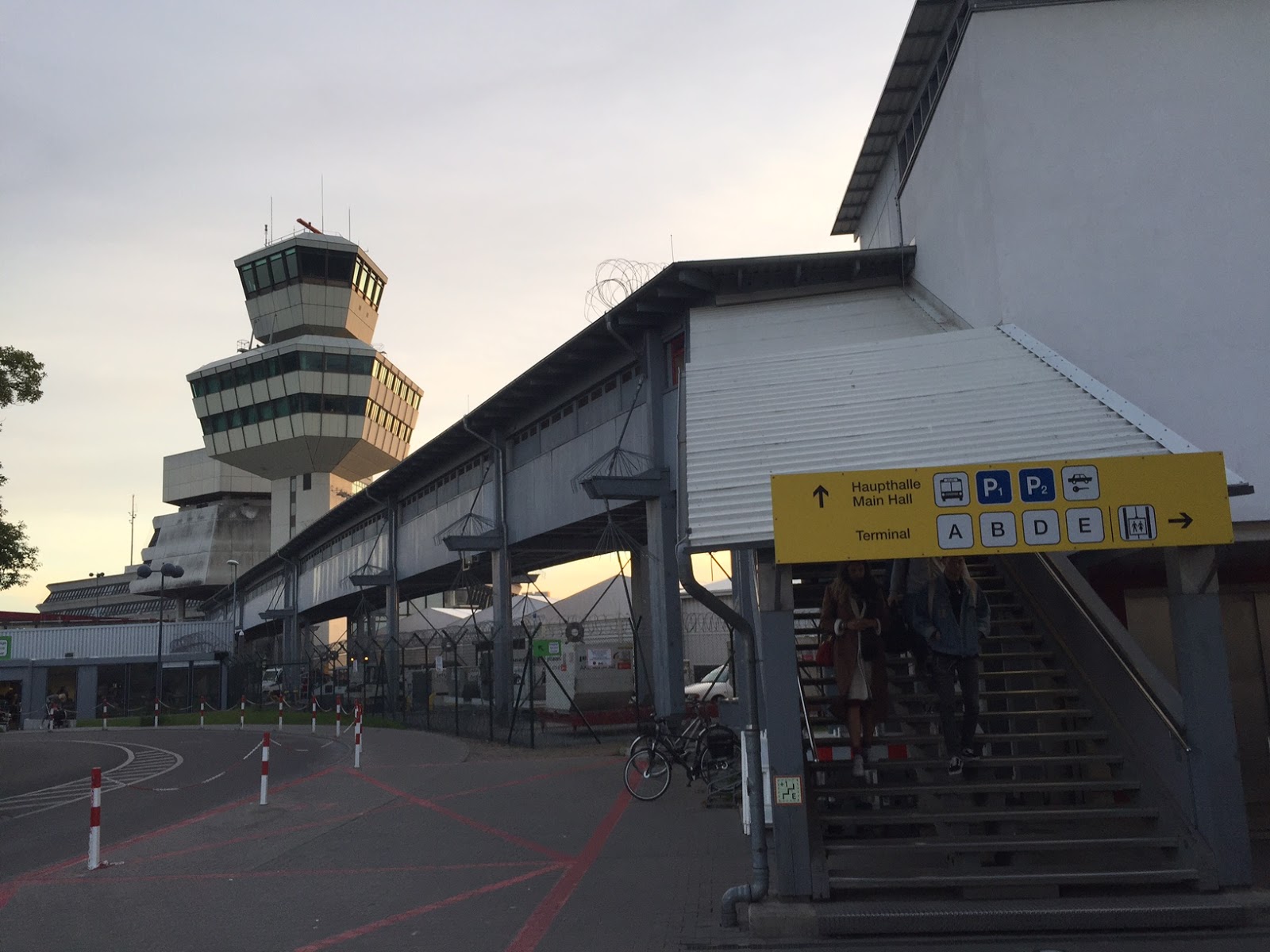
Terminal C at Berlin Tegel airport (TXL)

52° 33' 22.1034" N
13° 17' 52.8282" E

Monday, May 15, 2017

Plot on map


SOUTHERNMOST: 25.69° S                  
Garganta del Diablo, Iguaçu Falls, 
Paraná, Brazil

25° 41' 27.9" S
54° 26' 13.0" W
Wednesday, October 11, 2022


EASTERNMOST: 23.95° E

Athens International Airport, Athens, Greece
37° 56' 12.1956" N
23° 56' 48.3106" E
Sunday, September 25, 2016
(repeated Tuesday, September 27, 2016)


WESTERNMOST: 98.28° E


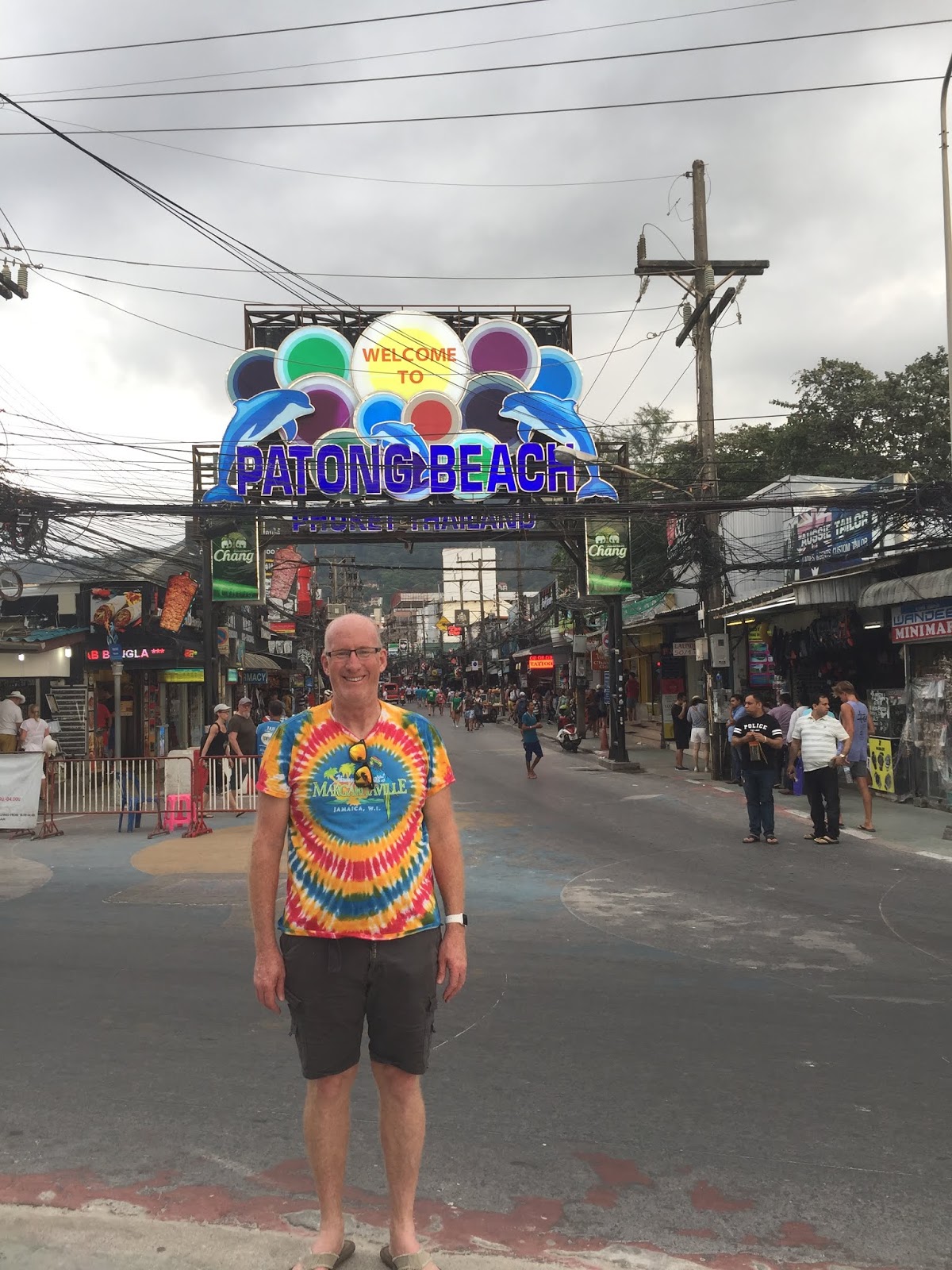
Between Patong and Karon Beach
Phuket Island, Thailand


7° 51' 44.9346" N
98° 17' 1.4202" E

January 16, 2018


Plot on map


Other temporary easternmost spots during January 2018
January 13, 2018 - Tian Tan Buddha/Ngong PingVillage
Lantau Island, Hong Kong
22° 15' 27.9108" N
113° 54' 6.663" E

January 11, 2018 - Hong Kong International Airport
22.314288 N
113.931159 E


PRIOR NORTHERNMOST: 52.43° N

On the A10 Ring Road on the north side of Amsterdam

52° 25' 31.5552" N
4° 53' 16.0512" E
Saturday, May 14, 2016

Plot on map

PREVIOUS PRIOR NORTHERNMOST: 51.45° N

On the Trans-Canada Highway, about 8 km NW of Lake Louise, Alberta

51° 27' 30.2652" N
116° 16' 7.3848" W
Saturday, May 23, 2015

Plot on map


PRIOR SOUTHERNMOST: 12.07° N

Caracas Baai, Curaçao

12° 4' 8.439" N
68° 51' 42.1524"

Tuesday, June 13, 2007

Plot on map


PRIOR EASTERNMOST: 7.06° E

Cologne, Germany
Transition ramp from southbound Autobahn 3 to Autobahn 4 and 59, east side of Köln
50° 55' 29.172" N
7° 3' 30.2522" E
Saturday, May 14, 2016
The eastward march of my easternmost point in May 2016

Thursday, May 5, 2016: Heathrow Airport, London
Thursday, May 5, 2016: Tower Bridge, London
Friday, May 6, 2016: Royal Naval Observatory, Greenwich, England
Saturday, May 7, 2016 - 48.88°N 2.36°E: Gare du Nord, Paris
Sunday, May 8, 2016 - 48.86°N 2.39°E: Père La Chaise Cemetery, Paris
Tuesday, May 9, 2016 - 48.87°N 2.78°E: Marne La-Vallée RER Station, Disneyland Paris
Friday, May 13, 2016 - 50.84°N 4.34°E: Bruxelles Midi Station, Brussels*
Friday, May 13, 2016 - 50.84°N 4.38°E: Parlamentarium (European Parliament), Brussels
Friday, May 13, 2016 - 52.38°N 4.90°E: Amsterdam Centraal Station, Amsterdam*
Friday, May 13, 2016 - 52.37°N 4.93°E: Brouwerij t'IJ, Amsterdam

* - Also a new northern record at the time


PRIOR WESTERNMOST: 158.10° W

Haleiwa, Oahu, Hawaii

21° 35' 35.448" N
158° 6' 12.5892" W
Monday, February 14, 2011


Plot on map


Conversions from Decimal to Degrees /Minutes/Seconds:
https://www.fcc.gov/media/radio/dms-decimal

Sunday, September 25, 2022

Secret Recipes Revealed Durinig Coronavirus Pandemic

Published April 10, 2020

Hilton Doubletree Hotels Chocolate Chip Cookies.

https://www.foxnews.com/food-drink/doubletree-hotel-official-chocolate-chip-cookie-recipe

Ingredients:

½ pound butter, softened (2 sticks)
¾ cup + 1 tablespoon granulated sugar
¾ cup packed light brown sugar
2 large eggs
1¼ teaspoons vanilla extract
¼ teaspoon freshly squeezed lemon juice
2¼ cups flour
½ cup rolled oats
1 teaspoon baking soda
1 teaspoon salt
Pinch cinnamon
2⅔ cups Nestle Tollhouse semi-sweet chocolate chips
1¾ cups chopped walnuts

Directions:

  1. Cream butter, sugar and brown sugar in the bowl of a stand mixer on medium speed for about 2 minutes.
  2. Add eggs, vanilla and lemon juice, blending with mixer on low speed for 30 seconds, then medium speed for about 2 minutes, or until light and fluffy, scraping down bowl.
  3. With mixer on low speed, add flour, oats, baking soda, salt and cinnamon, blending for about 45 seconds. Don’t overmix.
  4. Remove bowl from mixer and stir in chocolate chips and walnuts.
  5. Portion dough with a scoop (about 3 tablespoons) onto a baking sheet lined with parchment paper about 2 inches apart.
  6. Preheat oven to 300 degrees F. Bake for 20 to 23 minutes, or until edges are golden brown and center is still soft.
  7. Remove from oven and cool on baking sheet for about 1 hour.

Cook’s note: You can freeze the unbaked cookies, and there’s no need to thaw. Preheat oven to 300 degrees F and place frozen cookies on parchment paper-lined baking sheet about 2 inches apart. Bake until edges are golden brown and center is still soft.


Disneyland Churros Recipe

https://disneyparks.disney.go.com/blog/2020/04/cooking-up-the-magic-create-disneymagicmoments-at-home-with-disney-parks-churro-bites-recipe/

Ingredients

1 cup water
8 tablespoons butter
¼ teaspoon salt
¾ teaspoon ground cinnamon, divided
1¼ cups all-purpose flour
3 eggs
1½ cups vegetable or canola oil
½ cup sugar

Instructions

  1. Combine water, butter, salt, and ¼ teaspoon cinnamon in 1 ½-quart saucepan over medium heat. Bring pot to rolling boil.
  2. Reduce heat to low.
  3. Add flour and stir vigorously until mix forms a ball. Remove from heat and let rest for 5-7 min.
  4. Add eggs, one at a time, and stir until combined. Set aside.
  5. Heat oil in medium skillet or 1-quart saucepan over medium-high heat or until temperature reaches 350˚F.
  6. Spoon dough into piping bag fitted with large star tip. Pipe 1-inch strip of dough over saucepan, cut with knife, and drop into hot oil. Repeat until churro bites fill saucepan with room to fry.
  7. Fry churro bites until golden brown. Remove with slotted spoon or mesh spider strainer.
  8. Drain churro bites on paper towel.
  9. Mix sugar and ½ teaspoon cinnamon in medium bowl. Toss in churro bites until coated. Place on serving plate and serve with favorite dipping sauce.

Monday, April 15, 2019

Requiem for Notre Dame


It's not just the loss of a church.
It's not just a loss for Catholics.
It's not just a loss for Paris, nor for France.

Mais, non!

Today all of us have lost a treasure. A legacy bequeathed to us by medievel engineers, who devised the now-famous flying buttresses and figured out how to make towering, load-bearing walls stand tall and stand strong for eight centuries, and by craftsmen and artisans who devoted their entire lives and gave us the best of their talents scultpting stones, carving wood, and staining glass to create a simply beautiful cathedral, in the name of God.

I've had a sad, sickened feeling deep in my gut all afternoon.
Today's fire has left me empty and in disbelief.

Notre Dame survived the tumultuous history of France.
Notre Dame survived the French Revolution.
Notre Dame survived Hitler's occupation.
Today, however, Notre Dame is gone.

And it's a loss for humankind.


Monday, July 23, 2018

My Geographic Extremes - January 2018

Prior Entries in this series:


I love to travel!  It's fun to keep track of how far north I've been, how far west I've been, etc. I still haven't managed to get out of the northern hemisphere (the closest I've come to South America is the island of Curaçao, about 25 miles north of the Venezuelan coast), but I have really stretched my boundaries over the past couple of years.

In January 2018, I finally went so far west, that I was actually in east longitude! On January 10. 2018, I crossed the International Date Line for the first time, which meant that it instantly became January 11 as I hit eastern longitude. Nevertheless, until I finally circumnavigate the entire globe, I will continue to treat this a a "westernmost" extreme; after all, I did fly west to get there.

Interesting oddity: Two of the four compass point extremes are located on islands, and the other two are located at airports.

Here are my current geographic extremes (as of January 21, 2018)


NORTHERNMOST: 52.57° N

Terminal C at Berlin Tegel airport (TXL)

52° 33' 22.1034" N
13° 17' 52.8282" E

Monday, May 15, 2017

Plot on map


SOUTHERNMOST: 7.68° N

Maya Bay, Koh Phi Phi, Thailand

7° 40' 43.5" N
98° 45' 57.7" E

Thursday, January 18, 2018


EASTERNMOST: 23.95° E

Athens International Airport, Athens, Greece
37° 56' 12.1956" N
23° 56' 48.3106" E
Sunday, September 25, 2016
(repeated Tuesday, September 27, 2016)


WESTERNMOST: 98.28° E


Between Patong and Karon Beach
Phuket Island, Thailand


7° 51' 44.9346" N
98° 17' 1.4202" E

January 16, 2018


Plot on map


Other temporary easternmost spots during January 2018
January 13, 2018 - Tian Tan Buddha/Ngong PingVillage
Lantau Island, Hong Kong
22° 15' 27.9108" N
113° 54' 6.663" E

January 11, 2018 - Hong Kong International Airport
22.314288 N
113.931159 E


PRIOR NORTHERNMOST: 52.43° N

On the A10 Ring Road on the north side of Amsterdam

52° 25' 31.5552" N
4° 53' 16.0512" E
Saturday, May 14, 2016

Plot on map

PREVIOUS PRIOR NORTHERNMOST: 51.45° N

On the Trans-Canada Highway, about 8 km NW of Lake Louise, Alberta

51° 27' 30.2652" N
116° 16' 7.3848" W
Saturday, May 23, 2015

Plot on map


PRIOR SOUTHERNMOST: 12.07° N

Caracas Baai, Curaçao

12° 4' 8.439" N
68° 51' 42.1524"

Tuesday, June 13, 2007

Plot on map


PRIOR EASTERNMOST: 7.06° E

Cologne, Germany
Transition ramp from southbound Autobahn 3 to Autobahn 4 and 59, east side of Köln
50° 55' 29.172" N
7° 3' 30.2522" E
Saturday, May 14, 2016
The eastward march of my easternmost point in May 2016

Thursday, May 5, 2016: Heathrow Airport, London
Thursday, May 5, 2016: Tower Bridge, London
Friday, May 6, 2016: Royal Naval Observatory, Greenwich, England
Saturday, May 7, 2016 - 48.88°N 2.36°E: Gare du Nord, Paris
Sunday, May 8, 2016 - 48.86°N 2.39°E: Père La Chaise Cemetery, Paris
Tuesday, May 9, 2016 - 48.87°N 2.78°E: Marne La-Vallée RER Station, Disneyland Paris
Friday, May 13, 2016 - 50.84°N 4.34°E: Bruxelles Midi Station, Brussels*
Friday, May 13, 2016 - 50.84°N 4.38°E: Parlamentarium (European Parliament), Brussels
Friday, May 13, 2016 - 52.38°N 4.90°E: Amsterdam Centraal Station, Amsterdam*
Friday, May 13, 2016 - 52.37°N 4.93°E: Brouwerij t'IJ, Amsterdam

* - Also a new northern record at the time


PRIOR WESTERNMOST: 158.10° W

Haleiwa, Oahu, Hawaii

21° 35' 35.448" N
158° 6' 12.5892" W
Monday, February 14, 2011


Plot on map


Conversions from Decimal to Degrees /Minutes/Seconds:
https://www.fcc.gov/media/radio/dms-decimal


Saturday, December 9, 2017


I now have a travel blog, the Selfie Traveler

Find my travel posts there instead.

selfietravelerblog.wordpress.com

Thursday, October 19, 2017

Black Tuesday of 1987

Today is the 30th anniversary of the stock market crash of October 19, 1987. On that day, the Dow Jones Industrials average fell 508 points in one day at time when the average was only at 2200 to begin with. It would be the equivalent of a 5000 point drop today.

I remember being worried that another Depression was coming, but since I was young and had only a small amount invested back then, I left my 401k in the market. The good news was that less than six months later, the entire plunge had been recovered ...and more.

What I learned from that experience was never to panic, and certainly never pull out when prices are low. It's a lesson that served me well back in 2008 when the market lost nearly half of its value -- not in one day, both over a relatively short period of a few months. Then too, I did not pull my money out, and I have been rewarded with a near quadruple of the market since the low in early 2009.

The lesson I take from it is this: slow and steady wins the race. if you're in it for the long term, just keep putting money away, and don't fret about the short term movements on Wall Street. Other people want us to sell in a panic ..so they can profit on your losses.

Saturday, September 30, 2017

Recipe: Parmesan Penne Sausage Skillet


4 tbsp olive oil
4 tbsp chopped garlic
 1 cup sliced mushrooms
1/2 cup sliced red onions

1 14.5 oz can stewed tomatoes
1 cup penne pasta
2 Italian sausages (or 3 sausages if you wish)
1 roma tomato
1/2 pkg (30g-35g) chopped basil
1 tsp oregano
1 tbsp sea salt

1/2 cup shredded Parmesan cheese


In a skillet, add the olive oil, chopped garlic, sliced mushrooms, and red onions, and sautee.

While sauteeing, slice the sausages, and the roma tomato.

Then, add the stewed tomatoes, penne pasta, sliced sausages, roma tomato, basil, oregano and sea salt.

Use the empty can from the stewed tomatoes to add one can of water.

Stir. Cover. Simmer on medium heat for 10-12 minutes, stirring occasionally.

Stir in the Parmesan cheese and serve

Recipe: Crockpot Creamed Corn


2 lb frozen corn
1 cup whipping cream
2 cups milk
2 8 oz pkg cream cheese
1 stick butter
1/4 tsp pepper
1 tsp salt
2 tbsp sugar
1/4 tsp paprika

Cut the cream cheese into cubes, sliced the butter.

Place all of the ingredients into the crock pot. Stir. Stir occasionally while cooking.

Saturday, August 26, 2017

Recipe: Summer Picnic Macaroni Salad

There's no doubt that this pleasing salad packs a delicious, creamy punch with its generous proportion of mayonnaise and sour cream; the creaminess is complemented by crunchy vegetables that make this salad very fresh.

Honestly, although this recipe is easy enough to make, it requires substantial time to cut up all of the ingredients. I usually expect to spend at least an hour in the kitchen.

Tip: Making this salad tends to dirty a lot of dishes, so empty out the dishwasher before you begin so you can put the empty bowls in immediately after use.

Ingredients:

3 cups large elbow macaroni

1/2 pound medium cheddar cheese, cubed into 1/2" cubes
1/2 pound colby jack cheese, cubed into 1/2" cubes

2/3 cup chopped red onion
1 cup carrots, cubed into 1/4" cubes
3/4 cup chopped celery
3/4 cup green onions
1 floret broccoli

8oz package diced ham, yields about 1 1/2 cups
1 2.25 oz can diced olives

1 tub sour cream
equal portion mayonnaise

1 tsp salt
1/2 tsp pepper
1/2 tsp garlic powder


Cook the noodles. It should take about ten minutes for them to cook to al dente.  Strain, run cold water over the noodles to stop the cooking, and refrigerate. I like to apply a little bit of olive oil or pan spray to keep the noodles from sticking together..

Cut all of the veggies and the cheese. The broccoli should be cut down to bite-sized morsels, too.

In a separate bowl, mix together all of the veggies, ham, cheese, and olives. Then,  combine this with the cooled noodles.

In another bowl, stir together the mayonnaise and the sour cream. Then, stir in the salt, pepper, and garlic powder.

You are now ready to stir the mayo/sour cream mixture into the noodles.  I find that I get a better coating of all of the noodles by splitting the noodlss into two bowls, and then applying half of the wet mix to each.

Monday, August 21, 2017

7% makes all the difference.


When I was weighing the decision to take a day off from work to drive up to Idaho to see a total eclipse versus just staying here in Utah where it would be 93% of totality, I almost talked myself into the latter.

After all, 93% was much more than any of the previous partial eclipses I had viewed.  It would be almost dark.  How much difference could the last 7% make?

And I would have been so very wrong.

Even a 99% eclipse is not a total eclipse.  It's not until you get that final 1%, when finally you can remove your cardboard glasses and look directly at the sun with your naked eyes. That's right, during totality, you don't have to peer through a dark lens.

And what you see is beautiful. It's surreal. It's amazing. It's incredible. It's unreal. It's awesome. It's a marvel. You run out of words, because nothing can describe what you see and how it feels to see it. The brilliant white corona contrasts with the tar black disk blocking the sun. it's the whitest of whites and the blackest of blacks.

Before today, I never understood why people came from so far away to see a total eclipse, but now I do.

Like comparing pictures of the Grand Canyon to actually standing on the rim of that incredible canyon, so, too, photos, films, and videos of an eclipse do not begin to capture just what it's like to see one with your own eyes.

I stood along with thousands of people in a tiny town where the centerline of the eclipse path met I-15, Roberts, Idaho. Strangers who had arrived in vehicles bearing license plates from all over North America, gathered together in a county with barely 25,000 residents to share an experience which is common a regular astronomical occurrence but so rarely is as accessible as it was today.

As the moon slid into place and blocked the sun completely, reaching what astronomers call "C2," the beginning of totality, an excited roar came from the crowd of strangers and then cheers erupted along with applause in appreciation of this amazing phenomenon that we all had travelled so far to witness.

Shattering my misconception about a total eclipse, I discovered that it does not result in pitch blackness; I expected it to be completely dark during totality, like it is in the middle of the night.  Instead, it's more like the twilight of early dawn or the last moments of light that hang on well after sunset. The thing that you notice though, is that the twilight is not just in the eastern or western horizon as a sunrise or sunset would be, it's all the way around, 360 degrees, way off the distance.  It's almost unsettling.

I craned my neck and just stared in awe at the sun's shiny corona ringing the coal black disk. I smiled a giddy smile.

Then, just like that, only 150 seconds later, it was over. The moon continued its march and once again no longer blocked the entire sun.  We were back to 99%, and then 98%.

In one instant, all of the strangers who had gathered slowly in this remote place in a field and a gas station next to the interstate, left at once. What had been an orderly arrival beforehand became a mass exodus afterward, overwhelming the two lanes of the half-century old interstate. Picture your worst commute, only this one was on a road without a carpool lane, without ramp meters, and without viable alternatives, on a road where the 80 mph speed limit usually seems too slow.

Even still, despite the traffic and the relative shortness of totality, the experience of witnessing this wonderful phenomenon for the first time, left me wanting more. I must do this again. Roberts, Idaho, was my gateway drug, but now I'm craving a fix.

I've seen 100%, and I now know that 93% won't do it for me. I need that last 7%. I'll be there, for sure, in April 2024, less than seven years from now, to experience this again.

Wednesday, July 26, 2017

My Allure of the Seas Must-Do List

#1 - Sit out in Central Park at night -- They have live musicians. Grab a seat among the trees after dinner and order a drink and enjoy. If you do nothing else on this list, do this one!

#2 - Attend the guacamole class at Sabor.  For $20, they show you how they make their awesome guac, plus they'll serve you margaritas and feed you lunch. They'll also give you the recipe to take home.  I've made it several times since the cruise.

#3 - Have a drink in the Rising Tide Bar.  It's a place on the promenade.  Every half hour it rises up three decks. Yes, it's a gimmick, but it's cool.

#4 - Listen to the Latin music and have a mojito in Boleros. It's on the promenade right across from the karaoke bar (Karaoke bar is really fun, too)

#5 - See the Aqua Show.  If you haven't reserved it, make a reservation.  It runs on only the first two nights and features high divers. On the nights when they're not performing the show, walk by the theatre and see the dancing fountains -- similar to what you'd see at Bellagio.

#6 - Park Cafe - On boarding day, skip the Windjammer buffet and head up to Park Cafe in Central Park. You'll find salads, and sandwiches. So good that you'll be back for more on other days.

#7 - Do the zipline. It's only about six seconds, but, what? Are you not going to do it?

Saturday, June 17, 2017

Six Things You'll Hate About Living in Utah

Another friend from Fresno is moving to Utah. I've lived here nearly twenty-two years -- don't get me wrong:  I love it here, but there are things that take some adjustment, so here are six things that people from California will hate about living in Utah

1.  Yellow Light Runners - The Utah Driver Handbook says only that the "yellow light is an indication that the light is about to turn red." (p.24)  There is nothing there which indicates whether drivers should attempt to stop when the light turns yellow. Utah drivers have interpreted this one way: yellow means "keep going." You won't find anyone hitting the break pedal when the light is yellow.

2. State Liquor Stores - Picking up a bottle of wine at Vons on the way home from work is a thing of the past once you move to Utah. Wine is available only at stores which are owned and run by the state. These state liquor stores (1) are inconveniently located, and (2) keep limited hours. Salt Lake County, with over a million residents, has only seventeen locations.The stores are open only until 10pm, and they're closed every Sunday and on all holidays -- including Election Day.  Plan ahead. By the way, don't think about bringing wine from another state or trying to join a "Wine of the Month Club;" Utah law treats those things as bootlegging.

3. Inversions - Every winter, usually in January, expect at least one stretch when you can't see the sun in Salt Lake City for two weeks.  When snow is on the ground, the entire Wasatch Front is afflicted by this natural phenomenon where cold air is trapped by warmer air above, which yields depressing, overcast days. After suffering through ten days or so wherein high temps never gets up to even 32°F, you'll be praying for a snow storm which can break the grip of the inversion and clear the air.

4. Sales Tax on Groceries. It's the ultimate in regressive taxation. In my last years in California, politicians fought about extending the sales tax to snacks and how to define what a "snack" is, but all along Utah was taxing all grocery purchases at the full rate. During his term, Governor Jon Huntsman provided a little relief and cut the sale rate on groceries in half, but you'll still be paying some sales tax even on the most basic needs.

5. Traffic Lights on Mastarms.  In all of the neighboring states, including Arizona, Colorado, Wyoming, Idaho, and Nevada, as well as California, traffic engineers mount an additional traffic signal on the support pole. If you're driving east at sunrise or west at sunset, you don't have to stare directly into the sun to see the light; just look at the other signal.  Not so in Utah:  Signals are mounted only on the mastarm which extends across the street.  If you have to squint, so be it.

6. The Broncos and Rockies. According to the NFL and MLB, Utah is in the home market for the Denver teams, If you're a fan of the 49ers, you'll get some of the games, but if there is a conflict, the Broncos game always wins out. Baseball is no different: MLB defines Utah as Rockies territory. If you want to hear Jon Miller and Duane Kuiper, you might want to pay for a subscription to mlb.com.  We don't get the Giants network here -- it's Rockies broadcasts only.


Saturday, June 10, 2017

My Geographic Extremes - May 2017

Prior Entries in this series:


I love to travel!  It's fun to keep track of how far north I've been, how far west I've been, etc. I still haven't managed to get out of the northern hemisphere (the closest I've come to South America is the island of Curaçao, about 25 miles north of the Venezuelan coast), but I have really stretched my boundaries over the past couple of years.

2016 was the year I finally made it out of North America!  Two separate trips to Europe pushed my "easternmost extreme" point further and further east, so that it is now at the Athens airport is in the far eastern suburbs of the Greek capital,  Also, Europe is further north than you might imagine, so my northern extremes also expanded.  For instance, did you know that Rome, which is in the southern part of Europe is at the same latitude as Salt Lake City?

In May 2017, on another trip to Europe, my northernmost geographic extreme crept a little further north.  Previously, it had been on the northern side of Amsterdam, but now it is in Tegel Airport (TXL) northwest of Berlin.


Interesting oddity: Two of the four compass point extremes are located on islands, and the other two are located at airports.

Here are my current geographic extremes (as of May 15, 2017)

NORTHERNMOST: 52.57° N

Terminal C at Berlin Tegel airport (TXL)

52° 33' 22.1034" N
13° 17' 52.8282" E

Monday, May 15, 2017

Plot on map


SOUTHERNMOST: 12.07° N
Caracas Baai, Curaçao

12° 4' 8.439" N
68° 51' 42.1524"

Tuesday, June 13, 2007

Plot on map


EASTERNMOST: 23.95° E

Athens International Airport, Athens, Greece
37° 56' 12.1956" N
23° 56' 48.3106" E
Sunday, September 25, 2016
(repeated Tuesday, September 27, 2016)


WESTERNMOST: 158.10° W

Haleiwa, Oahu, Hawaii

21° 35' 35.448" N
158° 6' 12.5892" W
Monday, February 14, 2011

Plot on map


PRIOR NORTHERNMOST: 52.43° N

On the A10 Ring Road on the north side of Amsterdam

52° 25' 31.5552" N
4° 53' 16.0512" E
Saturday, May 14, 2016

Plot on map

PREVIOUS PRIOR NORTHERNMOST: 51.45° N

On the Trans-Canada Highway, about 8 km NW of Lake Louise, Alberta

51° 27' 30.2652" N
116° 16' 7.3848" W
Saturday, May 23, 2015

Plot on map


PRIOR EASTERNMOST: 7.06° E

Cologne, Germany
Transition ramp from southbound Autobahn 3 to Autobahn 4 and 59, east side of Köln
50° 55' 29.172" N
7° 3' 30.2522" E
Saturday, May 14, 2016
The eastward march of my easternmost point in May 2016

Thursday, May 5, 2016: Heathrow Airport, London
Thursday, May 5, 2016: Tower Bridge, London
Friday, May 6, 2016: Royal Naval Observatory, Greenwich, England
Saturday, May 7, 2016 - 48.88°N 2.36°E: Gare du Nord, Paris
Sunday, May 8, 2016 - 48.86°N 2.39°E: Père La Chaise Cemetery, Paris
Tuesday, May 9, 2016 - 48.87°N 2.78°E: Marne La-Vallée RER Station, Disneyland Paris
Friday, May 13, 2016 - 50.84°N 4.34°E: Bruxelles Midi Station, Brussels*
Friday, May 13, 2016 - 50.84°N 4.38°E: Parlamentarium (European Parliament), Brussels
Friday, May 13, 2016 - 52.38°N 4.90°E: Amsterdam Centraal Station, Amsterdam*
Friday, May 13, 2016 - 52.37°N 4.93°E: Brouwerij t'IJ, Amsterdam

* - Also a new northern record at the time


Conversions from Decimal to Degrees /Minutes/Seconds:
https://www.fcc.gov/media/radio/dms-decimal

Friday, December 30, 2016

LEAD READ

Lead.

How did you pronounce that word in your head when you read it?  Did it rhyme with "seed" or did it sound more like "bed?"

Which pronunciation is correct? Well, it depends on the usage.  "Lead" is not one of those words like "neither" which has two perfectly acceptable pronunciations which both have the same meaning; "lead" has very specific pronunciations depending on the meaning.

If you're referring to the heavy metal, then "lead" has a short E and rhymes with "bed," but if you're referring to the noun or verb which indicate being at the front of the pack, then it rhymes with "seed." There is only only way to pronounce the word in each of these sentences, but the pronunciation is different in each of them:

"The candidate's proposals sank like a lead weight."
"The view is always the same unless you're the lead dog."

In the first sentence, "lead" rhymes with "bed" because it refers to the metal. It would make no sense to rhyme it with "seed." Native speakers has no problem with this, but this is one of those aspects of English that can be incredibly confusing to a learner. The only way to know how to pronounce it is by the context of the usage.


Another such word is "read."

Unlike "lead," "read" doesn't vary its pronunciation based on varying definitions; the two pronunciations of "read" indicate the tense of the verb.  Present tense, long E; rhymes with "seed;" past tense, short E, rhymes with "bed." Here are two sentences:

"I must read the instructions before I attempt it."
"I read the instructions before I attempted it."

Again, a native speaker won't be tripped-up at all, The first one rhymes with "seed" and the latter sounds like "bed."

(A small aside, the first sentence is not strictly a present tense construction. After I wrote one that is:

"I read the newspaper every day."

I realized that the sentence could be read either way. If I rhyme it with "seed" then it would indicate actions that I perform habitually currently, but if I use short E, then it would refer to actions that I performed habitually in the past. Same words; same word order; same spelling. I have to understand the context to pronounce it correctly.)

With such confusion and difficulties., it's a wonder that English has been adopted as the world's second language.


Wednesday, November 9, 2016

Superdelegates Super Problem

It's time for Democrats to abandon the concept of Superdelegates. Using the Superdelegate rules, party establishment insiders were able to pack the DNC Convention with Hillary votes and deny the nomination to Bernie Sanders, who was the clear favorite of the Democrats' rank and file voters in the primaries and caucuses..

On the other side, the Republican establishment was't so lucky: since there are no Superdelegates in the GOP, the party insiders were forced to accept the nomination of outsider Donald Trump because he was the candidate who had accumulated the most delegates in the primaries. They didn't like it, but there was nothing that they could do about it.

In the end, one has to wonder if the election would have been more interesting if there had been outsider candidates on both sides, candidates who had enthusiastic, dedicated followings; a general election pitting Bernie vs Donald. Only the Superdelegate machinations prevented it, to disastrous effect for the Democrats. The era of party bosses picking nominees may be over.